1
/
of
1
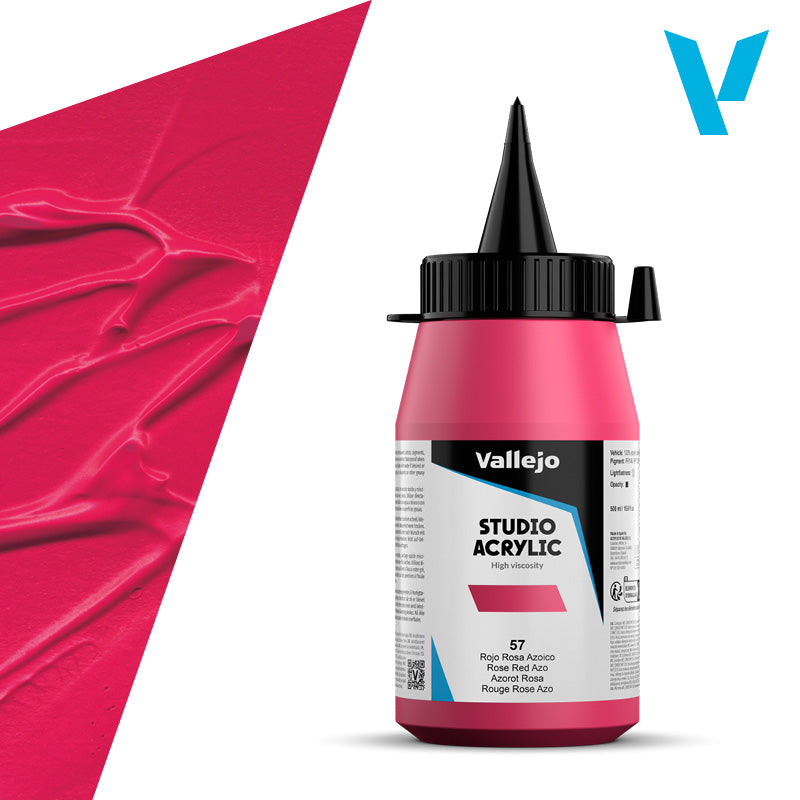
Pintura Acrílica Rojo Rosa Azoico 500 ml - Fine Arts
Fine Arts
Pintura Acrílica Rojo Rosa Azoico 500 ml - Fine Arts
Referencia: 23057
Regular price
20,95€
Regular price
Sale price
20,95€
Taxes included.
Shipping calculated at checkout.
Quantity
Couldn't load pickup availability
Colour: Azo Pink Red
Lightfastness: AA
Opacity: Opaque
Pigment: PR146, PR112, PW6
Pigment description: Naphthol, Quinacridone, Rutile Titanium Dioxide
ASTM Lightfastness Classification: I
Pigment classification: Mixture
Colour Index Number: -
Viscosity range (mPa.s): 15,000 - 20,000
Colour Index
The pigments used are both inorganic and organic. Inorganic pigments have been used sinc ...
Lightfastness: AA
Opacity: Opaque
Pigment: PR146, PR112, PW6
Pigment description: Naphthol, Quinacridone, Rutile Titanium Dioxide
ASTM Lightfastness Classification: I
Pigment classification: Mixture
Colour Index Number: -
Viscosity range (mPa.s): 15,000 - 20,000
Colour Index
The pigments used are both inorganic and organic. Inorganic pigments have been used sinc ...
Colour: Azo Pink Red
Lightfastness: AA
Opacity: Opaque
Pigment: PR146, PR112, PW6
Pigment description: Naphthol, Quinacridone, Rutile Titanium Dioxide
ASTM Lightfastness Classification: I
Pigment classification: Mixture
Colour Index Number: -
Viscosity range (mPa.s): 15,000 - 20,000
Colour Index
The pigments used are both inorganic and organic. Inorganic pigments have been used since ancient times, with the majority derived from or extracted from minerals and clays, such as natural earths, siennas, and ochres. Titanium, carbon, ultramarine blue, cobalt, and cadmium pigments also belong to this category. Many are now synthesised through industrial processes. Organic pigments are more modern, developed in the early 20th century thanks to new synthesis methods in Organic Chemistry. These synthetic pigments now represent a very important group in the manufacture of artists’ colours, producing bright, luminous tones with extraordinary intensity and excellent stability and permanence. The range of organic pigments is currently very extensive, including azo pigments, phthalocyanine blues and greens, dioxazines, pyrroles, anthraquinones, quinacridones, and more.
Lightfastness: AA
Opacity: Opaque
Pigment: PR146, PR112, PW6
Pigment description: Naphthol, Quinacridone, Rutile Titanium Dioxide
ASTM Lightfastness Classification: I
Pigment classification: Mixture
Colour Index Number: -
Viscosity range (mPa.s): 15,000 - 20,000
Colour Index
The pigments used are both inorganic and organic. Inorganic pigments have been used since ancient times, with the majority derived from or extracted from minerals and clays, such as natural earths, siennas, and ochres. Titanium, carbon, ultramarine blue, cobalt, and cadmium pigments also belong to this category. Many are now synthesised through industrial processes. Organic pigments are more modern, developed in the early 20th century thanks to new synthesis methods in Organic Chemistry. These synthetic pigments now represent a very important group in the manufacture of artists’ colours, producing bright, luminous tones with extraordinary intensity and excellent stability and permanence. The range of organic pigments is currently very extensive, including azo pigments, phthalocyanine blues and greens, dioxazines, pyrroles, anthraquinones, quinacridones, and more.
Share
